

IA
SEO e inteligencia artificial: Cómo funciona Google en 2026
El 46,7% de los clics orgánicos desaparecen en las búsquedas donde Google muestra AI Overviews. No es una proyección.
 Adrian Sobota
La relación entre SEO e inteligencia artificial ha cambiado para siempre: el 46,7% de los clics orgánicos desaparecen en las búsquedas donde Google muestra AI Overviews. No es una proyección. Es un dato medido por Pew Research Center sobre 68.000 consultas reales.
Si tu negocio depende del tráfico orgánico, ese número debería preocuparte. Pero no entrar en pánico, sino llevarte a entender qué ha cambiado y cómo adaptarte.
La relación entre SEO e inteligencia artificial ya no es una conversación teórica. Google ha cambiado las reglas del juego. Ahora genera respuestas con IA directamente en la página de resultados, los usuarios hacen preguntas a ChatGPT y Perplexity en lugar de buscar en Google, y el contenido generado por IA inunda internet. El posicionamiento SEO tal como lo conocías hace dos años ya no existe.
En este artículo vas a entender exactamente qué ha cambiado, qué datos reales tenemos sobre el impacto, qué estrategias funcionan hoy, y qué debería hacer tu negocio para adaptarse. Sin alarmismo, con datos, y con perspectiva práctica.
Qué Son las AI Overviews y Cómo Han Cambiado Google
Abre Google ahora mismo y busca “cómo mejorar la velocidad de mi web”. Antes de cualquier resultado orgánico, verás un bloque generado por inteligencia artificial que responde tu pregunta directamente. Eso es una AI Overview.
Google lanzó esta funcionalidad (antes llamada SGE, Search Generative Experience) y la ha ido expandiendo progresivamente. Hoy aparecen en aproximadamente el 13% de las búsquedas, pero ese porcentaje crece cada mes. En búsquedas informativas como “qué es el SEO técnico” o “cómo funciona el posicionamiento web”, la presencia es aún mayor.
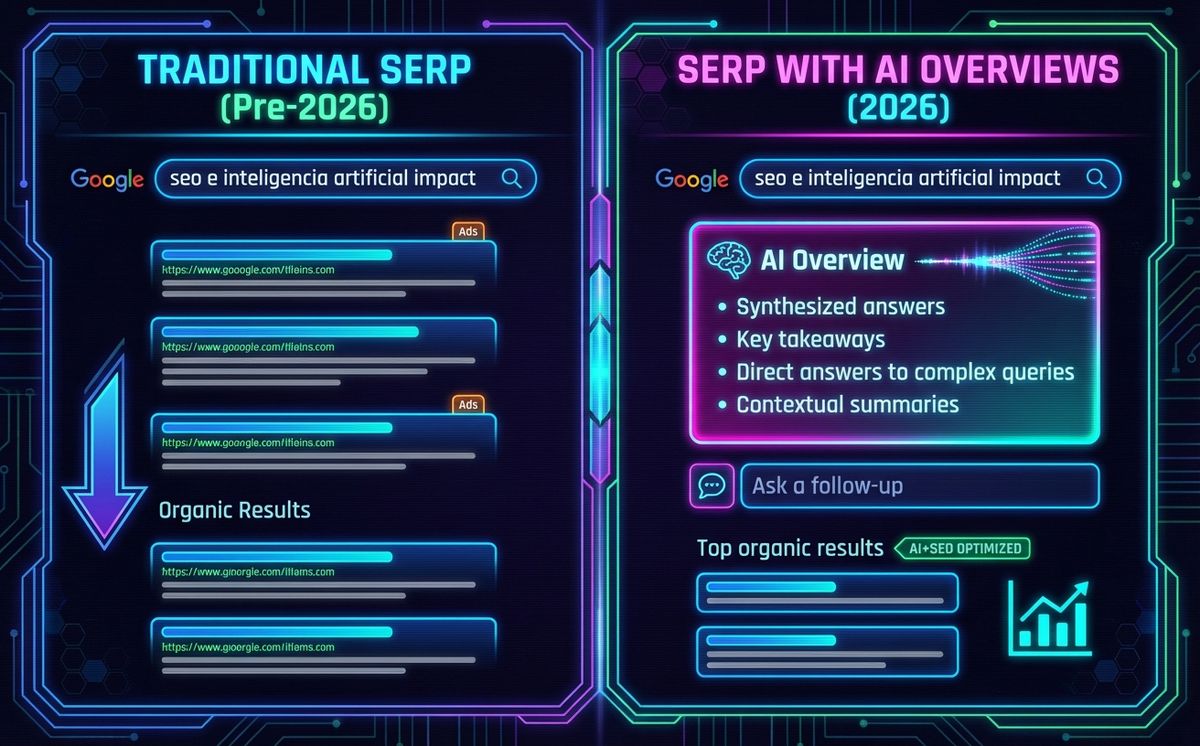
Lo que esto significa en la práctica: Google ya no solo organiza enlaces. Ahora responde. Y cuando la respuesta está ahí arriba, se produce lo que los expertos llaman una búsqueda “zero-click”: el usuario no necesita hacer clic en ningún resultado.
Ha surgido un concepto nuevo que conviene conocer: GEO (Generative Engine Optimization). Mientras que el SEO tradicional se centraba en rankear en los resultados orgánicos, el GEO se enfoca en conseguir que tu contenido sea citado por el modelo generativo de Google. Es decir, que la IA diga “según LetBrand…” o use tus datos en su respuesta. Es una evolución natural del SEO, no un reemplazo.
Marta, propietaria de una tienda online de cosmética natural en Sevilla, lo descubrió de la peor manera posible. En enero de 2026, su tráfico orgánico cayó un 28% sin que ella cambiara absolutamente nada en su web. “Pensé que era un error de Google Analytics”, nos contó. No lo era. Google había empezado a mostrar AI Overviews para las búsquedas informativas que le traían el 40% de su tráfico. Los usuarios obtenían la respuesta directamente en Google y dejaban de hacer clic.
La relación entre SEO e inteligencia artificial se hace tangible con cada AI Overview que aparece. Si quieres entender cómo las diferentes IAs se comparan para trabajo diario, incluido cómo generan contenido, te recomendamos nuestra comparativa de Claude vs ChatGPT.
El Impacto Real en el Tráfico: los Datos que Importan
Para entender el impacto real del SEO e inteligencia artificial, hablemos de números concretos. No de opiniones ni de predicciones vagas. Datos medidos.
Según el estudio de Seer Interactive actualizado en septiembre de 2025:
- El CTR orgánico bajó de 1,41% a 0,64% en búsquedas con AI Overviews
- El resultado en posición 1 perdió un 18% de clics cuando aparece una AI Overview
- La posición 2 perdió hasta un 39% de sus clics
- En promedio, el resultado top pierde un 34,5% de clics
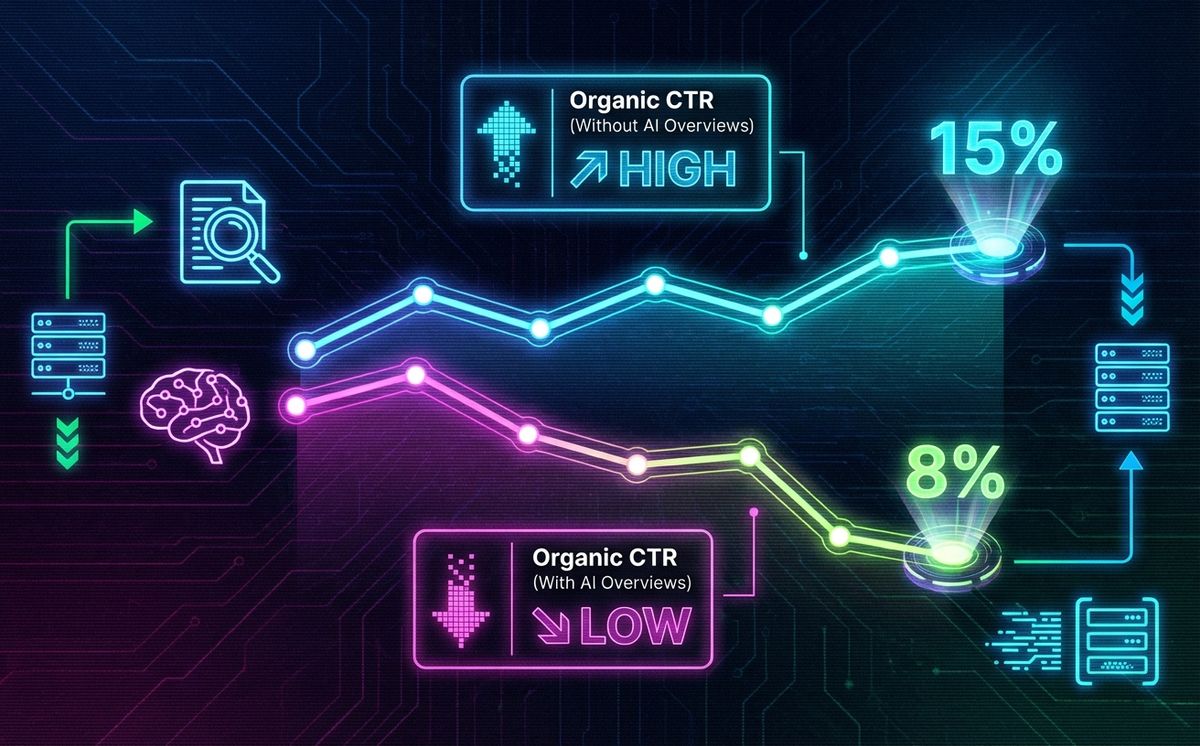
Según Gartner, para finales de 2026 el 25% del tráfico orgánico se habrá desplazado a chatbots de IA y asistentes de voz. Un cuarto de todo el tráfico.
Pero hay un dato que cambia la perspectiva por completo: las fuentes citadas dentro de las AI Overviews reciben un +35% de CTR boost. Es decir, si Google te cita en su respuesta de IA, recibes más tráfico que antes. No menos. Más.
El nuevo modelo es claro: AI Overviews reduce clics para todos excepto para las fuentes que cita. Esto invierte la competición SEO tradicional. Ya no se trata solo de estar en el top 3. Se trata de que la IA de Google te use como fuente.
Si tu estrategia SEO se basa únicamente en rankear en resultados orgánicos clásicos, estás jugando un juego que cada vez tiene menos jugadores y menos premios. El SEO en Google ya no se limita a los diez enlaces azules. Necesitas aparecer también dentro de las respuestas de IA.
¿Google Penaliza el Contenido Generado por IA?
Es la pregunta que todo el mundo se hace. La respuesta corta: no. Pero con matices importantes.
La posición oficial de Google es clara: no penaliza el contenido por haber sido generado con IA. Lo que penaliza, en línea con los criterios de E-E-A-T de Google, es el contenido que no aporta valor, sea quien sea el que lo haya creado. El criterio es “helpful content”, contenido útil. No importa si lo escribió un humano, una IA o una combinación de ambos.
Dicho esto, hay un patrón que Google sí detecta y penaliza: la generación masiva de contenido sin supervisión ni valor añadido. Publicar 200 artículos escritos por ChatGPT sin revisión, sin experiencia real detrás, sin datos propios, es exactamente el tipo de contenido que Google ha aprendido a filtrar.
Víctor, director de marketing de una consultora financiera en Madrid, aprendió esto en primera persona. En septiembre de 2025, su equipo publicó 150 artículos generados con IA en tres meses. “Pensamos que más contenido significaba más tráfico”, explicó. Durante el primer mes, efectivamente el tráfico subió un 15%. Pero en diciembre, Google aplicó una actualización de helpful content y el dominio perdió el 60% de su tráfico orgánico de golpe. “Tardamos cuatro meses en recuperar la mitad. Y tuvimos que borrar 120 de los 150 artículos.”
La regla del SEO e inteligencia artificial en 2026 es simple: la IA es una herramienta excelente para crear contenido. Pero el criterio, la experiencia y la supervisión humana siguen siendo imprescindibles. Usa Claude o ChatGPT para investigar, estructurar y redactar borradores. Pero añade tu experiencia, datos propios y revisión editorial antes de publicar.
E-E-A-T en la Era de la IA: Por Qué tu Experiencia Importa Más que Nunca
Si hay un concepto que define el SEO e inteligencia artificial en 2026, es E-E-A-T: Experience (Experiencia), Expertise (Pericia), Authoritativeness (Autoridad) y Trustworthiness (Confiabilidad).
Google siempre ha valorado estos factores. Pero en la era de la IA, son más importantes que nunca. La razón es lógica: si cualquiera puede generar un artículo de 2.000 palabras sobre cualquier tema en cinco minutos, el contenido genérico ya no vale nada. Lo que tiene valor es la experiencia real.
En 2026, el E-E-A-T Google lo mide a través de:
- Consistencia de marca en toda la web: ¿Tu empresa aparece mencionada de forma coherente en múltiples fuentes?
- Validación por parte de agentes IA: ¿Otros modelos de IA te citan como fuente fiable?
- Señales de autoría real: ¿Hay personas reales detrás del contenido, con perfiles verificables?
- Datos y experiencia de primera mano: ¿El contenido incluye información que solo alguien con experiencia real podría aportar?
Aquí es donde las pymes tienen una ventaja que muchos no ven. Una gran empresa puede producir contenido masivo, pero rara vez tiene la cercanía y la experiencia directa que tiene un profesional que trabaja con clientes reales todos los días. Si eres un consultor SEO que audita webs de pymes, tus hallazgos reales, tus métricas de antes/después, tus errores y aprendizajes tienen más valor para Google que un artículo genérico escrito por un equipo de contenido que nunca ha tocado una Search Console.
¿Quieres ver cómo la IA puede automatizar parte de tu flujo de trabajo sin perder la supervisión humana? Lee nuestra guía sobre cómo construir agentes de IA para entender las posibilidades.
Estrategias de SEO e Inteligencia Artificial que Funcionan en 2026
Ya sabemos qué ha cambiado. Hacer SEO con inteligencia artificial no es opcional: es el nuevo estándar. Veamos qué hacer al respecto.
Optimizar para AI Overviews (GEO)
Si quieres que Google te cite en sus respuestas de IA, tu contenido necesita ser:
- Extremadamente estructurado: Usa headings claros, listas, tablas. Los modelos de IA necesitan estructura para extraer información
- Respuestas directas: Después de cada H2, responde la pregunta en las primeras 40-60 palabras. Luego expande
- Datos verificables y citables: Incluye estadísticas con fuentes, datos propios, cifras concretas
- Schema markup: Implementa JSON-LD (Article, FAQ, HowTo) para que Google entienda tu contenido
- Consistencia de marca: Tu nombre debe aparecer de forma coherente en todo internet
El SEO Técnico Sigue Siendo la Base
La IA no ha eliminado la necesidad de un buen SEO técnico. Al contrario, lo ha hecho más crítico. Si tu web es lenta, tiene problemas de indexación o no funciona bien en móvil, ni la mejor estrategia de contenido te va a salvar.
Los fundamentales no han cambiado:
- Core Web Vitals: LCP bajo 2,5 segundos, CLS bajo 0,1
- Mobile-first: Más del 60% del tráfico viene de móvil
- Structured data completa: JSON-LD para que Google (y su IA) entienda tu contenido
- Indexación limpia: Sin páginas duplicadas, sin errores 404, sitemap actualizado
- HTTPS y seguridad: Requisito básico, no negociable
Si no sabes cómo está tu web en estos fundamentales, una auditoría SEO técnica profesional te dice exactamente qué arreglar y en qué orden. En LetBrand las hacemos por 200 euros, sin compromiso.
Contenido de Autoridad, no de Volumen
La era del “publicar más para rankear más” ha terminado. En 2026, 10 artículos excelentes valen más que 100 mediocres. Lo que funciona:
- First-party data: Datos propios, casos de clientes, métricas reales
- Experiencia documentada: No digas “el SEO es importante”. Muestra el antes y después de un proyecto real
- Actualización constante: Google premia el contenido actualizado. Revisa tus artículos existentes cada trimestre
- Profundidad sobre amplitud: Cubre un tema a fondo en lugar de tocar 20 temas superficialmente
- Formato optimizado para IA: Usa tablas, listas numeradas y respuestas directas debajo de cada heading. Los modelos de IA extraen información de contenido bien estructurado con mucha más facilidad que de bloques de texto denso
El Posicionamiento SEO ya no es Solo Google
Una de las transformaciones más profundas: el posicionamiento SEO ya no se limita a Google. Los usuarios buscan en ChatGPT, Perplexity, Claude, Gemini. Según el análisis de Edge AI Vision Alliance, los modelos de IA en dispositivos locales van a cambiar aún más cómo se consume información.
Incluso hay quien ya ejecuta modelos de IA directamente en su móvil, sin internet, con herramientas como Gemma 4 de Google. El punto: la búsqueda se está fragmentando, y tu marca necesita estar presente en todos estos canales.
Esto significa que tu estrategia de Brand SEO importa más que nunca. No se trata solo de que Google te muestre. Se trata de que cuando un usuario le pregunte a cualquier IA “qué agencia de SEO conoces en España”, tu nombre aparezca. Y eso se construye con contenido de calidad, presencia consistente, y autoridad real en tu nicho.
Si te interesa el mundo de las herramientas open source que están cambiando la IA, echa un vistazo a OpenClaw, el agente de IA open-source.
Qué Significa Esto para tu Negocio
Toda esta información sobre SEO e inteligencia artificial está muy bien. Pero si diriges una pyme, la pregunta real es: ¿qué hago yo ahora?
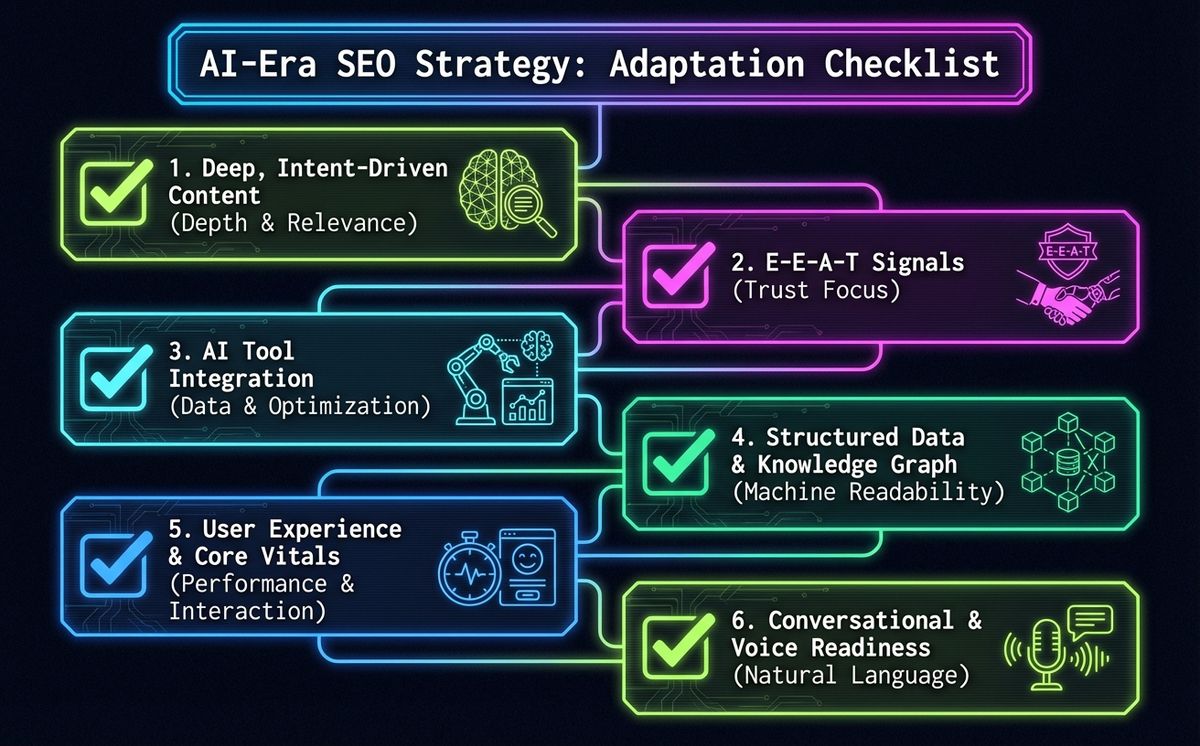
Checklist rápido: ¿tu SEO está preparado para la era de la IA?
- ¿Tu web carga en menos de 2,5 segundos? (Core Web Vitals)
- ¿Tienes structured data (JSON-LD) implementado?
- ¿Tu contenido demuestra experiencia real, no solo información genérica?
- ¿Has actualizado tus artículos principales en los últimos 6 meses?
- ¿Apareces citado en alguna AI Overview de Google?
- ¿Tu marca sale mencionada cuando preguntas por tu sector en ChatGPT?
- ¿Tienes un autor real y verificable detrás de tu contenido?
Si has respondido “no” a tres o más preguntas, tu posicionamiento SEO necesita atención.
Elena, cofundadora de una startup de software de gestión en Barcelona, hizo este mismo ejercicio en febrero de 2026. “Respondí ‘no’ a cinco de las siete preguntas”, nos contó. “Contraté una auditoría SEO, implementamos structured data, reescribimos nuestros 5 artículos principales con datos reales de clientes, y pusimos mi nombre como autora en todo el contenido.” Tres meses después, uno de sus artículos apareció citado en una AI Overview por primera vez. Su tráfico orgánico a ese artículo subió un 42%.
Lo importante: no necesitas hacerlo todo de golpe. Empieza por los fundamentales técnicos, luego mejora tu contenido, y después trabaja en tu autoridad de marca. Los negocios que se adaptan ahora tendrán una ventaja competitiva enorme cuando las AI Overviews se generalicen al 100% de las búsquedas. Los que esperen, se encontrarán compitiendo con desventaja en un terreno que ya no entienden.
SEO e Inteligencia Artificial: el Futuro ya Está Aquí
Recapitulemos:
- Las AI Overviews de Google reducen el CTR orgánico un 34,5% de media, pero las fuentes citadas ganan un 35% más de clics
- Google no penaliza el contenido de IA. Penaliza el contenido sin valor, lo haga quien lo haga
- E-E-A-T es más importante que nunca: experiencia real, datos propios y autoridad verificable
- El SEO técnico sigue siendo la base. Sin velocidad, structured data y mobile-first, nada funciona
- El nuevo objetivo es aparecer citado en las respuestas de IA, no solo rankear en resultados orgánicos
- El posicionamiento SEO ya no se limita a Google. ChatGPT, Perplexity y otros modelos son canales de descubrimiento
El futuro del SEO no es un misterio: exige contenido real, experiencia demostrable y base técnica sólida. El SEO mediocre sí ha muerto. La diferencia entre los negocios que van a prosperar y los que van a desaparecer de Google no es el presupuesto. Es la capacidad de adaptarse: contenido real, experiencia demostrable, base técnica sólida.
No necesitas más contenido. Necesitas mejor contenido. Y una base técnica que le permita a Google (y a su IA) entenderlo.
¿Quieres saber exactamente dónde está tu web y qué necesita para competir en la era de la IA? Hacemos auditorías SEO técnicas por 200 euros. Sin compromiso, sin pitch. Te decimos qué arreglar, en qué orden, y por qué. Reserva tu auditoría.
Artículos Relacionados

Las skills para agentes son el estándar abierto que funciona con Claude Code, Copilot, Gemini CLI y 45+ agentes de IA. Un archivo. Todas las herramientas.
Leer más
Cada fin de semana de partido, Cloudflare bloqueado en España tumba tiendas online, pagos y apps. Los piratas ven el partido. Tu negocio paga la factura.
Leer másListo para empezar tu proyecto?
Hablemos de cómo podemos ayudar a tu marca a crecer con una estrategia digital personalizada.
Contáctanos