

SaaS
Como crear un SaaS desde cero en 2026: Guia completa
El 90% de las startups fracasan. Y entre los SaaS, el porcentaje es aún mayor si cuentas los que nunca llegan a tener un solo cliente de pago.
 Adrian Sobota
Si quieres saber cómo crear un SaaS, empieza por un dato: el 90% de las startups fracasan. Y entre los SaaS, el porcentaje es aún mayor si cuentas los que nunca llegan a tener un solo cliente de pago. Pero los que sobreviven tienen algo en común: empezaron pequeño, validaron rápido, y no gastaron más de lo necesario.
Si quieres saber cómo crear un SaaS en 2026, este artículo te va a dar lo que la mayoría de guías no dan: un stack tecnológico concreto (no “elige el que más te guste”), costes reales en euros (no rangos absurdos en dólares), y los pasos que de verdad importan, con la honestidad de decirte también lo que puede salir mal.
Construimos SaaS para clientes todas las semanas en nuestro estudio de desarrollo. Esto es lo que hemos aprendido sobre cómo crear un SaaS que realmente funcione.
Qué es un SaaS y por Qué Todo el Mundo Quiere Crear Uno
Si te preguntas qué es un SaaS, la respuesta es sencilla: un SaaS (Software as a Service) es un software que funciona en la nube, al que los usuarios acceden desde el navegador, y por el que pagan una suscripción recurrente. No se instala. No se descarga. Se usa.
Ejemplos de SaaS que probablemente usas todos los días: Notion para documentos, Slack para comunicación, Canva para diseño, Stripe para pagos, Google Workspace para email. Todos funcionan igual: entras, pagas mensual o anualmente, y el software se actualiza solo.
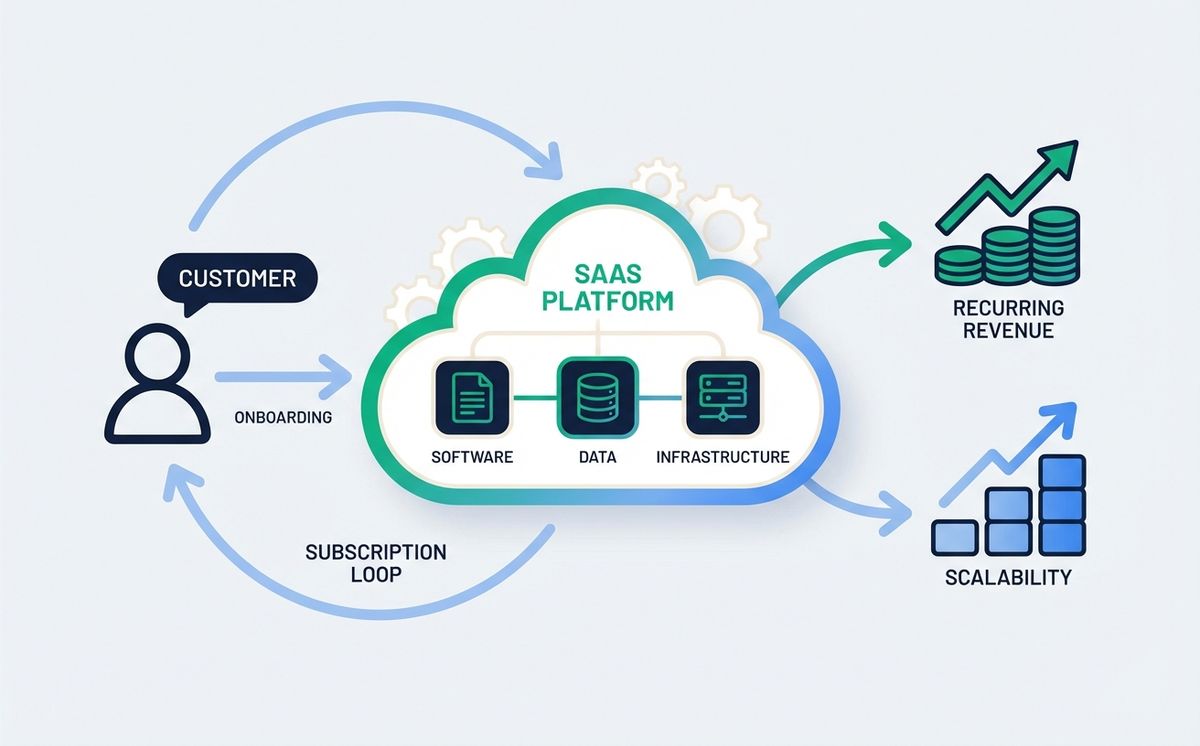
¿Por qué el modelo de negocio SaaS es tan atractivo? Tres razones:
- Ingresos recurrentes: No vendes una vez. Cobras cada mes. Un cliente que paga 50 euros/mes son 600 euros/año sin volver a venderle nada.
- Escalabilidad: El coste de servir a un usuario más es cercano a cero. El mismo software sirve a 10 o a 10.000 clientes.
- Valoración: Los negocios SaaS se valoran entre 5x y 15x su facturación anual recurrente. Un SaaS que factura 100.000 euros/año puede venderse por 500.000 a 1,5 millones.
Javier, desarrollador frontend en una agencia de Barcelona, lo entendió cuando empezó a calcular. “Tenía un cliente que me pagaba 3.000 euros por proyecto, cada tres meses. Un SaaS con 100 usuarios a 30 euros/mes me daría lo mismo, pero de forma predecible y sin depender de un solo cliente.” En enero de 2026 lanzó su primer micro SaaS. Seis meses después factura 2.800 euros/mes con 93 usuarios.
Si quieres ver cuánto cuesta construir una web app o un SaaS, tenemos una guía completa de precios de desarrollo web con rangos reales.
Micro SaaS: La Forma Más Inteligente de Empezar
No necesitas una idea de mil millones. No necesitas inversores. No necesitas un equipo de 10 personas. Si quieres aprender cómo crear un SaaS sin arruinarte, lo que necesitas es un micro SaaS.
Un micro SaaS es un producto SaaS pequeño, enfocado en resolver UN problema específico para UN nicho concreto. Lo puede construir y mantener una sola persona (o un equipo muy pequeño). Piensa en una herramienta que automatiza el envío de facturas para fisioterapeutas, o un dashboard de métricas para tiendas Shopify, o un bot que gestiona reservas para restaurantes.
¿Por qué micro SaaS antes que un SaaS ambicioso?
- Menor inversión inicial: Un MVP de micro SaaS puede costar entre 400 y 2.000 euros
- Validación más rápida: Puedes lanzar en 4-8 semanas, no en 6 meses
- Nicho = menos competencia: En vez de competir con Notion, compites en un mercado donde nadie ha resuelto bien el problema
- Rentable antes: Con 50 usuarios a 20 euros/mes ya tienes 1.000 euros de ingresos recurrentes
- Riesgo bajo: Si no funciona, has invertido poco. Pivotas y pruebas otra cosa
Cómo validar tu idea antes de escribir una línea de código:
- Identifica un problema que tú o gente cercana tenga
- Busca en Reddit, Twitter/X y foros si más gente se queja de lo mismo
- Crea una landing page que describa la solución y un formulario de interés
- Si 50 personas se apuntan en dos semanas, tienes algo. Si no, prueba otra idea
- Habla con 10 de esas personas. Pregunta cuánto pagarían
La validación es el paso que el 90% de fundadores se salta. Y es exactamente por eso que el 90% fracasa.
El Stack Tecnológico para Crear un SaaS en 2026
Aquí es donde la mayoría de guías te dicen “elige la tecnología que mejor conozcas”. Nosotros vamos a ser más específicos, porque en el desarrollo SaaS el stack importa y afecta directamente al coste, velocidad de desarrollo y capacidad de escalar.
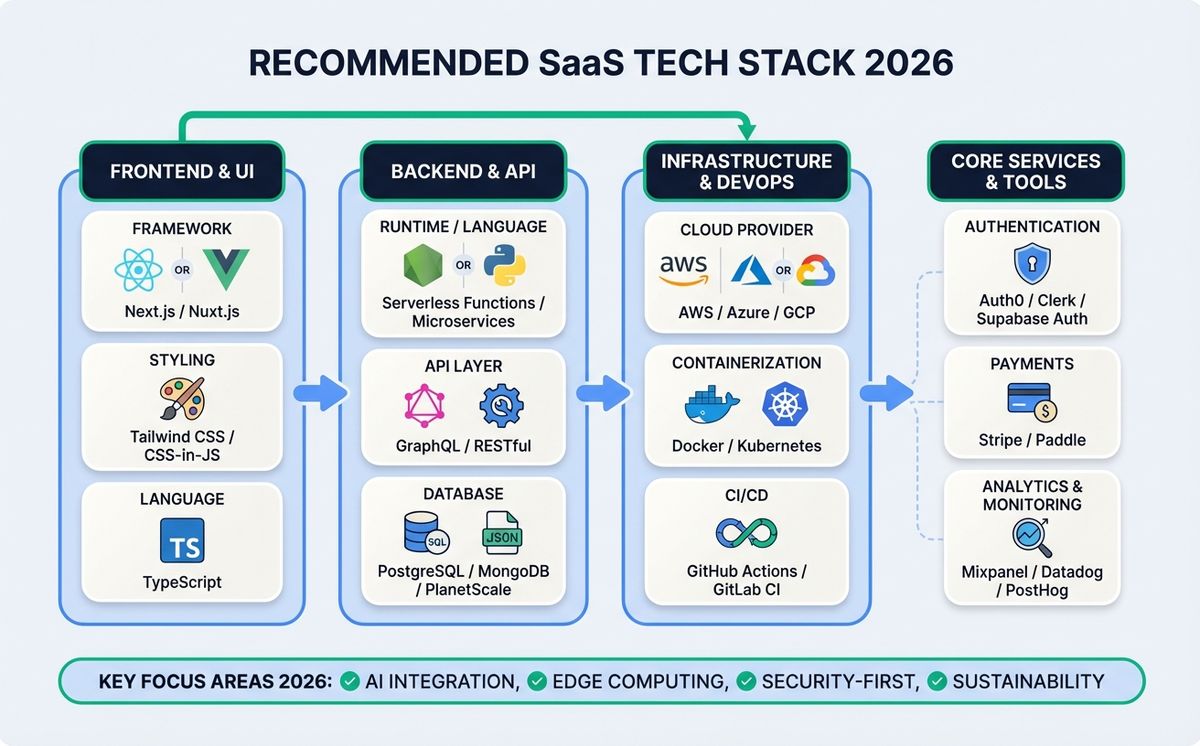
Frontend: Next.js + React + TypeScript
Next.js es el framework de React que usan Vercel, Notion, y miles de startups. Te da Server Components (renderizado en servidor, mejor SEO), App Router (rutas organizadas), y TypeScript para código tipado que tiene menos bugs. Es el estándar del mercado en 2026.
Backend y base de datos: Supabase (PostgreSQL)
Supabase es una alternativa open source a Firebase, construida sobre PostgreSQL. Te da base de datos, autenticación, storage y funciones edge. Todo en uno. Tiene un tier gratuito generoso para empezar y escala bien. Para un SaaS, Supabase reduce semanas de desarrollo en gestión de usuarios, permisos y datos.
Autenticación: Supabase Auth
Registro, login, roles de usuario, magic links, OAuth (Google, GitHub). Todo incluido en Supabase, sin tener que montar un sistema de auth desde cero. Un paso que antes llevaba semanas ahora lleva horas.
Pagos y suscripciones: Stripe
Stripe es el estándar para pagos online en SaaS. Suscripciones recurrentes, pruebas gratuitas, facturación, gestión de planes. La integración con Next.js es directa. Cobra un 1,5% + 0,25 euros por transacción en Europa.
Despliegue: Vercel
Deploy automático desde Git, preview URLs para cada pull request, CDN global, escalado automático. Vercel tiene un tier gratuito perfecto para empezar y escala sin que tengas que tocar infraestructura.
AI-assisted development
En 2026, construir un SaaS sin herramientas de IA es como escribir código sin autocompletado. Herramientas como Claude Code, Cursor o v0 de Vercel aceleran el desarrollo entre un 30% y un 50%. No te reemplazan como desarrollador. Te multiplican. Si quieres entender cómo se comparan las diferentes IAs para trabajo de desarrollo, lee nuestra comparativa de Claude vs ChatGPT.
¿Por qué este stack y no otro? Porque es el que usamos todos los días en LetBrand para construir productos digitales. Next.js + Supabase + Stripe + Vercel te da un SaaS funcional, escalable y mantenible con el menor tiempo y coste posible. No es el único stack válido. Pero es el que mejor relación calidad/precio tiene en 2026 para pymes y emprendedores.
Alternativas legítimas: Laravel (PHP) si vienes de ese ecosistema, Django (Python) si necesitas mucho procesamiento de datos, Ruby on Rails si priorizas velocidad de prototipado. Todos son buenos. Pero ninguno tiene el ecosistema de deploy, hosting gratuito y developer experience que ofrece Next.js + Vercel en 2026, especialmente si estás montando tu primera SaaS startup.
Cuánto Cuesta Crear un SaaS en 2026
Los rangos que vas a encontrar en internet sobre cuánto cuesta crear un SaaS son absurdos: “de 5.000 a 500.000 dólares”. Eso no ayuda a nadie. Vamos a ser concretos con los costes reales del desarrollo de SaaS en España.
MVP de micro SaaS: 400-3.000 euros. Lo esencial: landing, auth, funcionalidad core, pagos con Stripe. 4-8 semanas de desarrollo.
SaaS funcional completo: 5.000-15.000 euros. Auth + roles + dashboard + admin panel + pagos + notificaciones + onboarding. 8-16 semanas.
SaaS enterprise: 15.000-50.000+ euros. Multi-tenancy, APIs, integraciones con terceros, analytics avanzado, compliance. 4-12 meses.
Costes mensuales de infraestructura (para empezar):
- Vercel: Gratis (tier hobby) o 20 euros/mes (Pro)
- Supabase: Gratis (hasta 50.000 filas) o 25 euros/mes (Pro)
- Stripe: Solo comisiones por transacción (sin fijo)
- Dominio: ~10 euros/año
- Email transaccional (Resend): Gratis hasta 3.000 emails/mes
- Total para empezar: 0-50 euros/mes
Según el análisis de Cleveroad, a nivel internacional un MVP SaaS cuesta entre 5.000 y 15.000 dólares (50-100 horas de desarrollo). Con herramientas de IA ese tiempo se reduce un 30-40%, lo que baja el coste a 3.000-8.000 dólares. En España, con costes de desarrollo más competitivos, los números son aún más favorables.
En LetBrand hacemos MVPs de SaaS desde 400 euros. Consulta nuestros planes y precios para ver qué incluye cada rango.
Marta, fundadora de una startup de gestión de citas médicas, aprendió la lección por el camino difícil. “Contraté a una agencia grande que me presupuestó 48.000 euros por la primera versión. Tardaron 7 meses. Cuando lanzamos, descubrí que el mercado quería algo diferente de lo que habíamos construido.” Después de ese fracaso, rehízo el producto como micro SaaS con un equipo pequeño. Coste: 2.500 euros. Tiempo: 6 semanas. “La diferencia fue que esta vez lancé rápido, hablé con usuarios desde el día uno, y construí solo lo que pedían.”
Cómo Crear un SaaS Paso a Paso
Paso 1: Valida la idea (semana 1-2)
No construyas nada todavía. Habla con personas que tienen el problema que quieres resolver. Si 10 personas te dicen “pagaría por esto” y al menos 3 de ellas especifican cuánto pagarían, tienes una señal fuerte. Si no, busca otro problema.
Paso 2: Define tu MVP (semana 2-3)
El MVP no es “el producto con menos funcionalidades”. Es la versión más pequeña que resuelve el problema core y permite cobrar. Si tu SaaS gestiona reservas, el MVP es: login + calendario + crear reserva + pago. Nada más. Sin analytics, sin app móvil, sin integraciones.
Paso 3: Construye el MVP (semana 3-8)
Con el stack que hemos descrito (Next.js + Supabase + Stripe + Vercel), el desarrollo SaaS de un MVP funcional toma 4-8 semanas. Es la forma más rápida de crear un producto digital real y ponerlo en manos de usuarios. Usa herramientas de IA para acelerar. No busques perfección. Busca algo que funcione y que puedas poner delante de usuarios reales.
Paso 4: Lanza y cobra desde el día uno
Cobrar es la única validación que importa. Si la gente no paga, no tienes un negocio. Tienes un hobby. Lanza con un precio, aunque sea bajo. 10 euros/mes es mejor que gratis, porque el acto de pagar filtra a los usuarios que de verdad tienen el problema.
Paso 5: Itera basándote en datos
Una vez tienes usuarios pagando, escucha. Mira qué funcionalidades usan, cuáles ignoran, qué piden. Construye lo que piden, no lo que tú crees que necesitan. Las métricas que importan: churn (cuántos se van), MRR (ingresos mensuales recurrentes), NPS (satisfacción).
Paso 6: Escala lo que funciona
Cuando tienes product-market fit (usuarios que pagan, no se van, y recomiendan), es momento de invertir en crecimiento. SEO (necesitas que te encuentren en Google, aquí es donde entender cómo funciona el SEO hoy marca la diferencia), marketing de contenidos, y tal vez algo de IA integrada en el producto. Si quieres ideas sobre cómo integrar agentes de IA en tu SaaS, tenemos una guía para eso.!Diagrama de los pasos para crear un SaaS desde cero con timeline
El Modelo de Negocio SaaS: Pricing y Métricas Clave
El pricing de tu SaaS puede hacer o deshacer el negocio. Estas son las tres estrategias principales:
Freemium: Versión gratuita limitada + planes de pago. Funciona si tu producto tiene efecto red (más usuarios = más valor) o si el coste marginal de un usuario gratuito es cercano a cero. Ejemplos: Slack, Notion, Canva.
Free trial: Acceso completo durante 7-14 días, luego pago. Funciona mejor que freemium para SaaS B2B donde el valor se demuestra con uso real. Menos usuarios gratuitos que nunca pagan.
Pago directo: Sin versión gratis. El usuario paga o no usa. Funciona cuando el problema que resuelves es tan claro y urgente que no necesitas convencer. Ideal para micro SaaS de nicho.
La regla del 10x para fijar precios: Tu producto debería ahorrar al usuario al menos 10 veces lo que le cuesta. Si tu SaaS le ahorra 500 euros/mes en tiempo, cobra 50 euros/mes. No 5.
Métricas que debes vigilar desde el día uno:
- MRR (Monthly Recurring Revenue): Ingresos mensuales recurrentes. La métrica más importante.
- Churn: Porcentaje de usuarios que cancelan cada mes. Si es mayor al 5% mensual, tienes un problema.
- LTV (Lifetime Value): Cuánto paga un cliente durante toda su relación contigo.
- CAC (Customer Acquisition Cost): Cuánto te cuesta conseguir un cliente nuevo. LTV debe ser al menos 3x el CAC.
Diego, cofundador de un SaaS de gestión de inventario para restaurantes, lanzó con un precio de 15 euros/mes. “Pensamos que siendo baratos tendríamos más clientes.” Después de 4 meses con 80 usuarios y un MRR de 1.200 euros, hicieron una encuesta: la mayoría de usuarios dijeron que habrían pagado 40-50 euros/mes. Subieron el precio a 45 euros/mes para nuevos clientes. El churn no cambió. Su MRR se triplicó en 3 meses.
Lo que Nadie te Cuenta sobre Crear un SaaS
La mayoría fracasan. No por el producto. Por falta de distribución. Construir es la parte fácil. Conseguir que la gente lo encuentre, lo pruebe, y pague es la parte difícil. Si no tienes una estrategia de adquisición de clientes (SEO, contenido, partnerships, cold outreach), el mejor producto del mundo se queda en tu servidor sin usuarios.
El soporte al cliente consume más que el desarrollo. Cuando tienes 50 usuarios pagando, cada uno espera respuestas. Bugs, dudas, solicitudes de funcionalidades. Prepárate para dedicar tanto tiempo a soporte como a desarrollo, especialmente al principio.
El marketing es más difícil que construir el producto. Puedes construir un SaaS en 6 semanas. Conseguir los primeros 100 clientes pagando puede llevarte 6 meses. Invierte en marketing desde el día uno. No esperes a tener el producto “perfecto”.
La soledad del fundador es real. Si construyes solo, vas a tener días en los que todo parece inútil. Es normal. Busca comunidades (Indie Hackers, X/Twitter SaaS, comunidades de micro SaaS en Discord). El apoyo de otros que están en el mismo camino vale más que cualquier curso.
Cuándo buscar un partner técnico: Si no sabes programar, necesitas a alguien que sí. No un freelancer para un proyecto puntual. Un partner o un estudio que entienda tu visión a largo plazo. La diferencia entre un freelancer que desaparece y un equipo que te acompaña puede ser la diferencia entre el éxito y el fracaso de tu SaaS startup.
Tu SaaS Empieza con una Decisión
Recapitulemos lo esencial:
- Un SaaS es software en la nube con suscripción recurrente. El modelo de negocio más escalable que existe.
- Micro SaaS es la forma más inteligente de empezar: bajo coste, rápida validación, riesgo mínimo.
- El stack recomendado en 2026 es Next.js + Supabase + Stripe + Vercel, con AI-assisted development.
- Un MVP de SaaS puede costar desde 400 euros y estar listo en 4-8 semanas.
- Cobra desde el día uno. La única validación que importa es que alguien pague.
- Los que sobreviven no son los que tienen más dinero. Son los que validan más rápido y gastan menos.
La barrera de entrada para crear un SaaS nunca ha sido tan baja. El stack es gratuito para empezar, las herramientas de IA multiplican tu productividad, y un micro SaaS enfocado puede generar ingresos reales con menos de 100 usuarios.
Lo que te falta no es tecnología. Es dar el paso.
¿Quieres crear un SaaS y necesitas un equipo técnico que lo construya? Cuéntanos tu proyecto. Te decimos si tiene sentido, qué costaría, y en cuánto tiempo lo tendríamos listo. Sin pitch, sin compromiso. Solo honestidad técnica.
Artículos Relacionados


Listo para empezar tu proyecto?
Hablemos de cómo podemos ayudar a tu marca a crecer con una estrategia digital personalizada.
Contáctanos